



Introduction
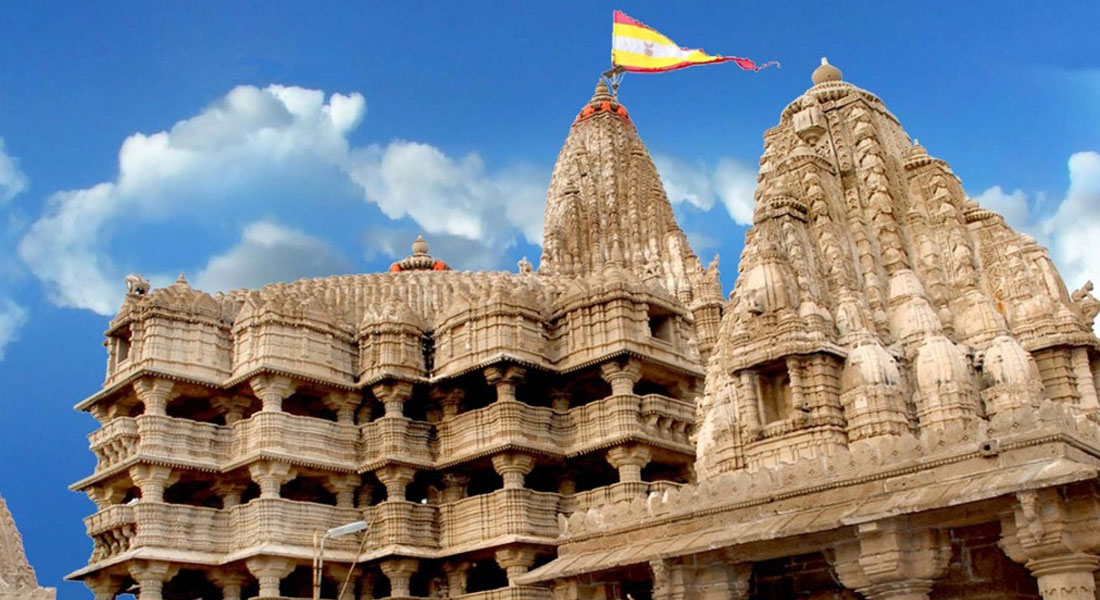
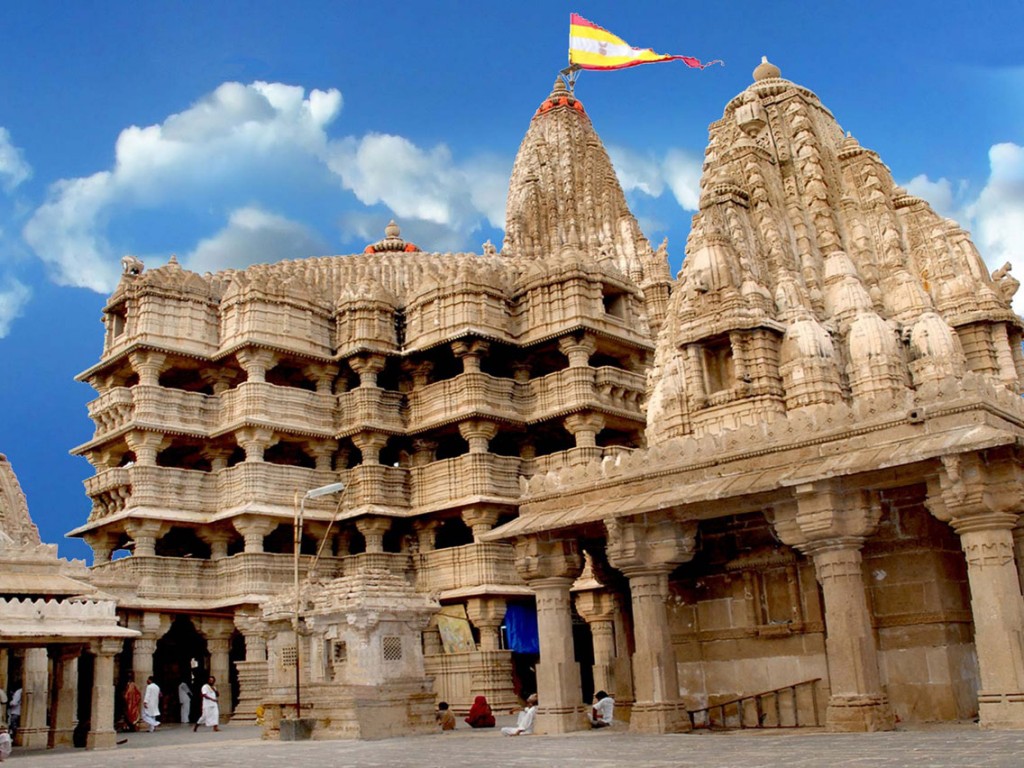
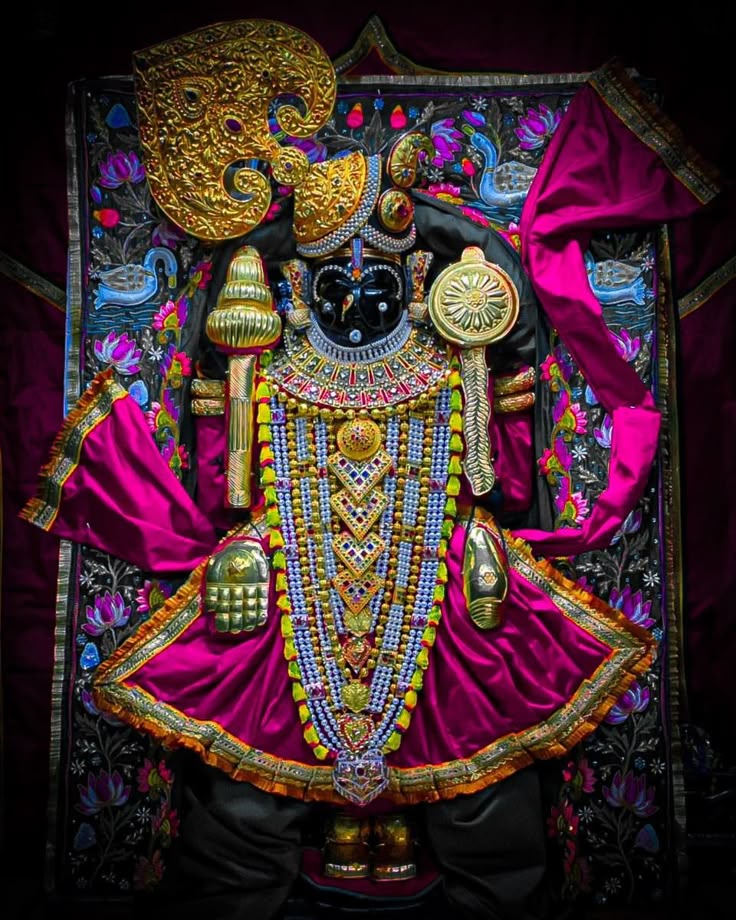
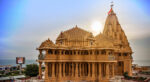
Dwarkadhish Temple, also known as Jagat Mandir, is a highly revered Hindu temple dedicated to Lord Sri Krishna, located on the Gomati coast in Dwarka, Gujarat. Lord Krishna is worshipped here as Dwarkadhish (King of Dwarka). The temple is considered over 1,200 years old according to the Department of Archaeology.
Location and Setting
The temple is situated on the Gomati creek, near the Arabian Sea. Rising majestically from the coastal landscape, the shrine offers a divine and scenic atmosphere enhanced by its proximity to the river and the sea.
Historical and Mythological Significance
It is believed that the original temple was established by Vajranabh, the great-grandson of Lord Krishna, around 1400 BCE, on the remains of Krishna’s ancient kingdom, which was submerged in the sea. This makes Dwarka one of the most ancient and sacred cities in Hindu tradition.
Architectural Features
Dwarkadhish Temple is built of soft limestone and consists of a sanctum (garbhagriha), vestibule, and a rectangular hall with porches on three sides. The temple’s beautifully carved shikhara rises about 43 meters high, and a massive 52-yard-long flag atop the temple is visible from nearly 10 km away.
Temple Gateways
The temple has two main entrances:
Swarga Dwar (Gate to Heaven) – the entry point for pilgrims
Moksha Dwar (Gate to Liberation) – the exit gate, symbolizing spiritual freedom
A flight of 56 steps leading from the Gomati River further enhances the temple’s grandeur.
Religious Importance
Dwarkadhish Temple is one of the most important pilgrimage sites for Vaishnav devotees and holds a central place in the Char Dham Yatra. A visit to the temple is believed to bring peace, devotion, and spiritual liberation.
Conclusion
Dwarkadhish Temple stands as a timeless symbol of Lord Krishna’s divine legacy, ancient heritage, and spiritual grandeur. Its sacred history, magnificent architecture, and serene coastal setting make it one of the most significant temples in India.


Leave feedback about this