



Description
Introduction
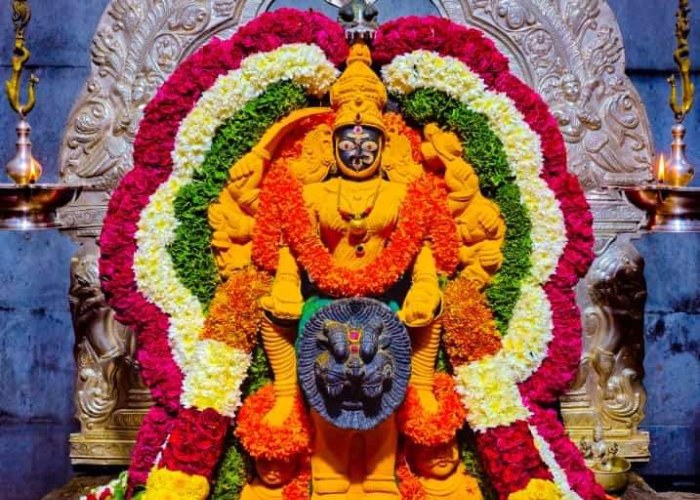
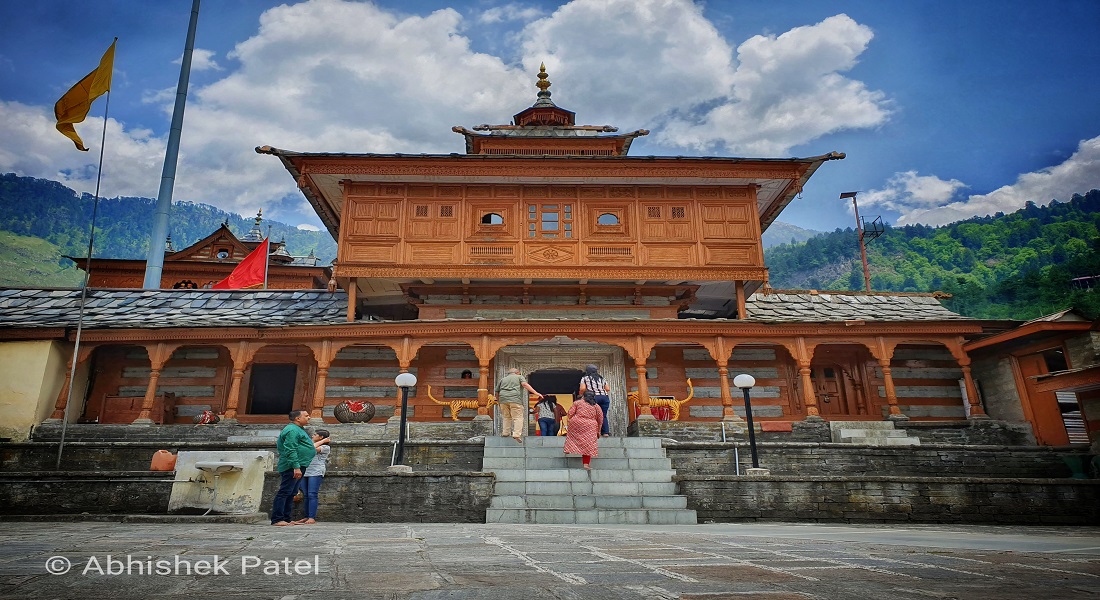
Banashankari Temple is a famous Hindu temple located in Badami town of Bagalkot district, Karnataka. The temple is dedicated to Goddess Banashankari, a form of Goddess Parvati (Shakti). She is also popularly known as Shakambari, meaning “the Goddess who nourishes with vegetation.”
Location and Setting
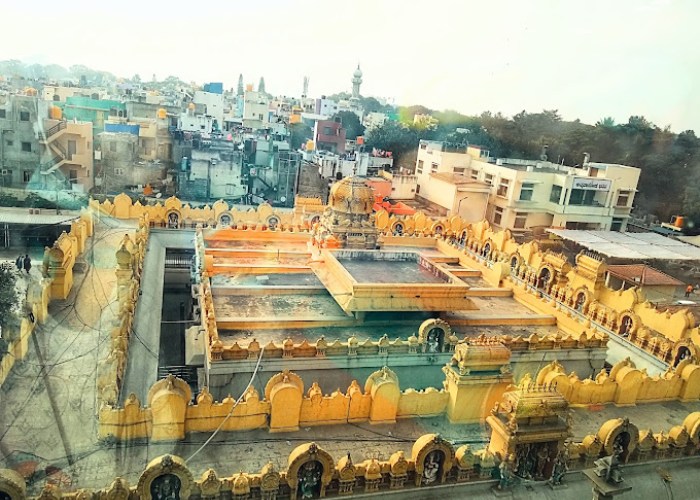
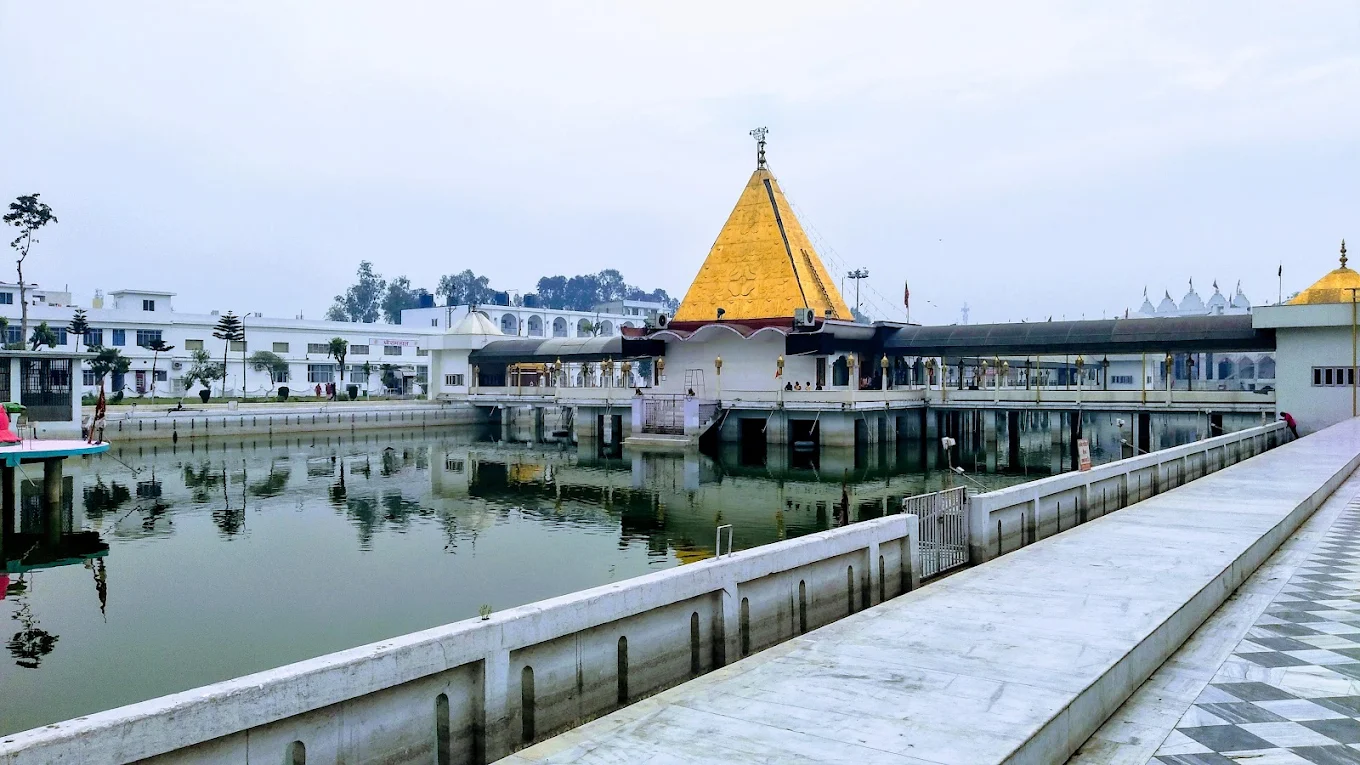
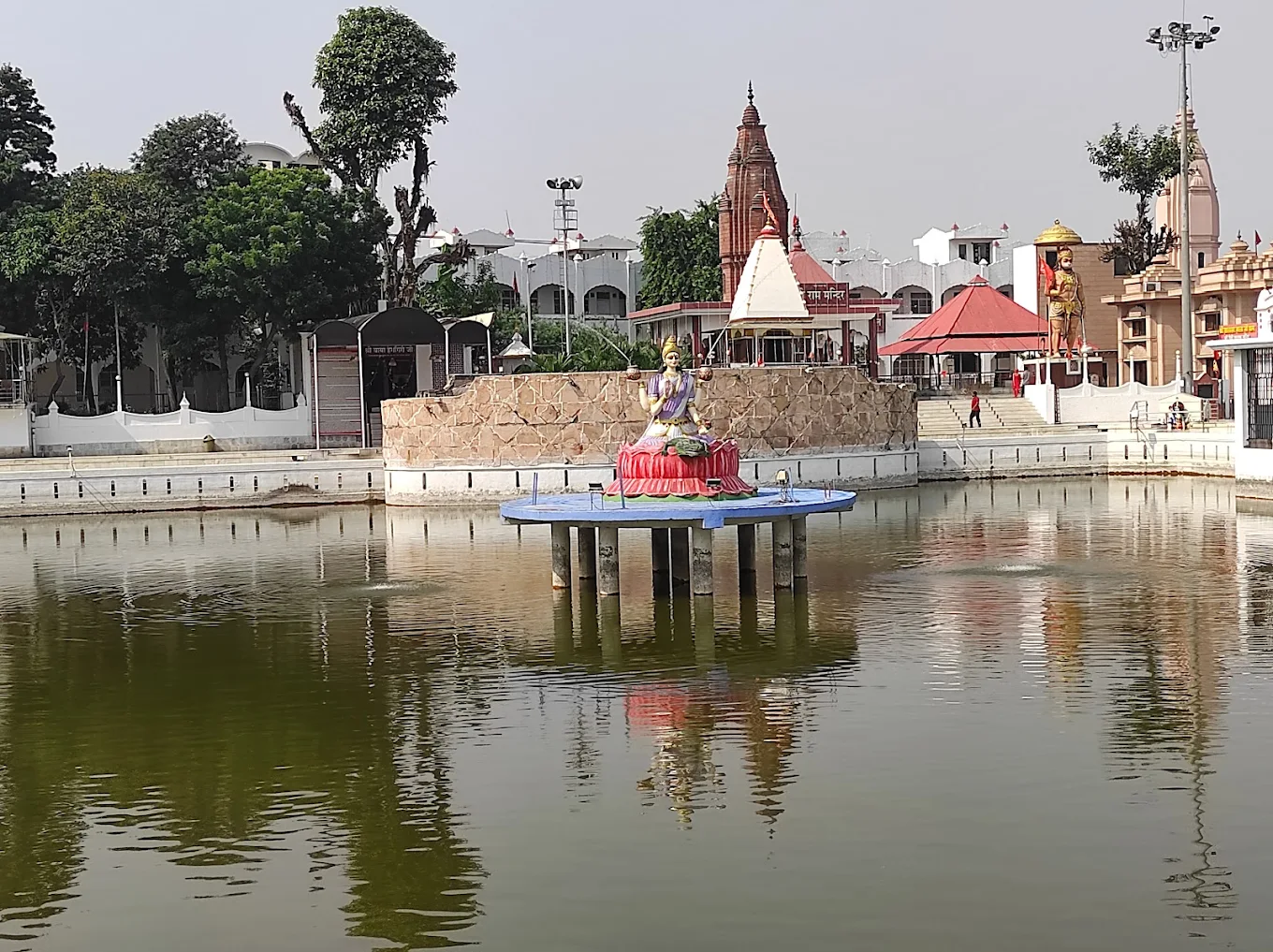
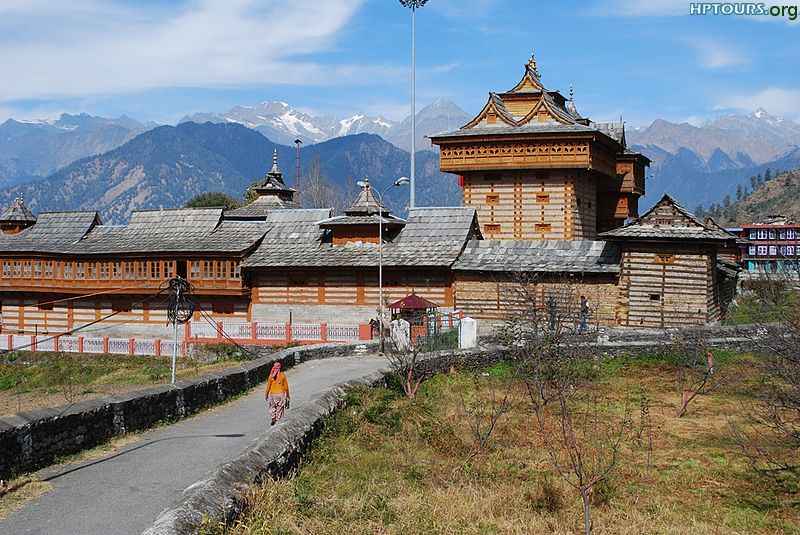
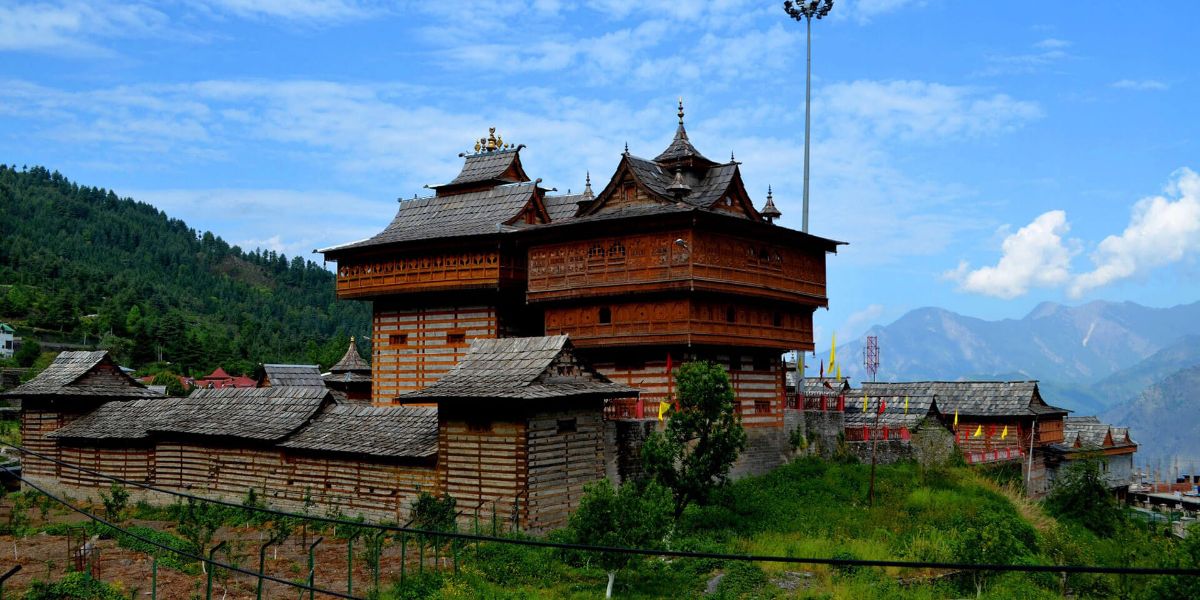
The temple is situated near Badami, a historic town known for its rock-cut caves and ancient temples. It is surrounded by a scenic landscape with hills and a large temple tank (Haridra Tirtha) in front of the shrine, adding to its spiritual beauty.
Presiding Deity
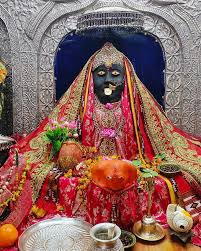
The main deity is Goddess Banashankari (Shakambari). She is depicted seated on a lion, holding weapons and symbols of protection. Devotees worship her as a compassionate mother who protects her followers and provides nourishment and prosperity.
Mythological Significance
According to legend, Goddess Shakambari appeared to destroy the demon Durgamasura, who had deprived the world of sacred knowledge and caused suffering. To relieve famine and hunger, the Goddess produced vegetation, fruits, and vegetables from her body, earning the name Shakambari (Bearer of Greens).
Historical Importance
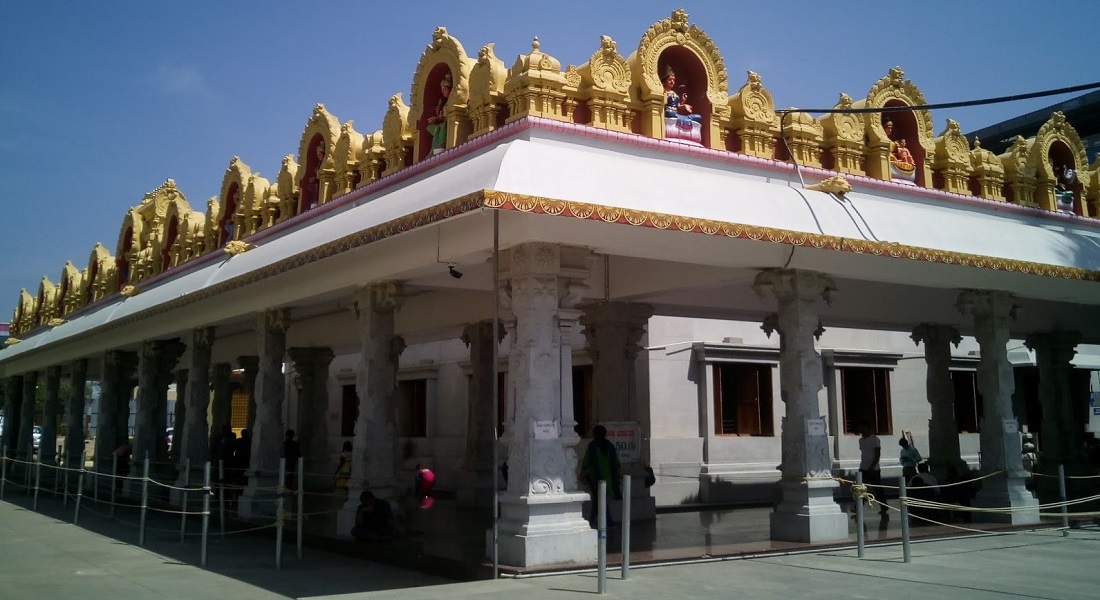
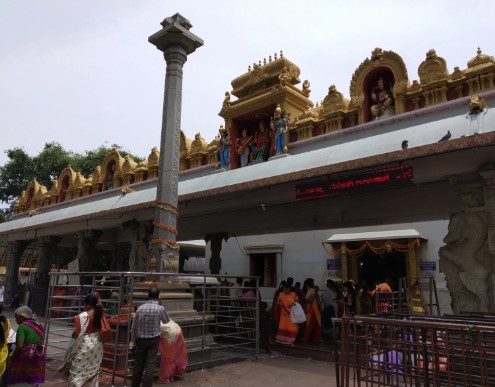
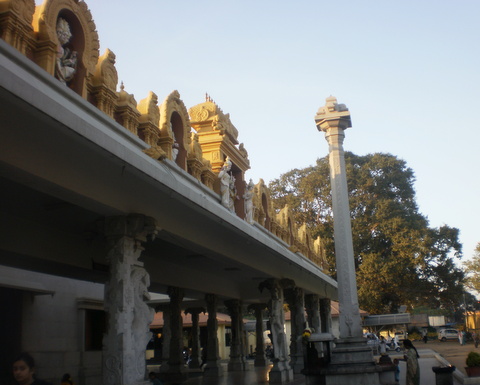
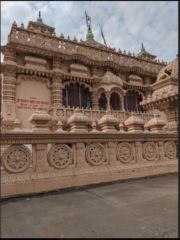
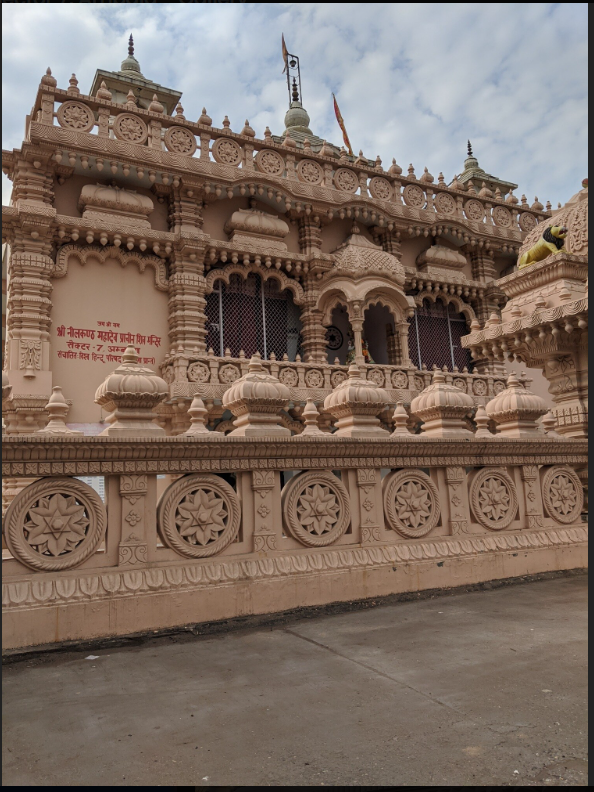
The temple is believed to have been originally built during the 7th century by the Chalukya rulers and later renovated by the Vijayanagara kings. It reflects the traditional Dravidian style of temple architecture.
Festivals and Rituals
The most important festival celebrated here is the Banashankari Jatre (Fair), held annually in January–February (during the Hindu month of Pausha). Devotees from across Karnataka gather in large numbers. Special pujas and rituals are performed daily.
Spiritual Importance
Banashankari Temple is considered a powerful center of Shakti worship in Karnataka. Devotees believe that the Goddess removes difficulties, protects families, and blesses them with health and prosperity.
Conclusion
Banashankari Temple in Karnataka stands as a symbol of divine protection and nourishment. With its deep mythological roots, historical significance, and vibrant festivals, the temple continues to attract thousands of devotees and remains an important spiritual landmark in South India.
Map View
Location
Invalid YouTube URL


Leave feedback about this